
About that Star....
I've been skeptical. How could they follow something so high in the sky?

I was recently in a discussion about the Star of Bethlehem, on a Protestant radio station. I told them I feel bad when I talk about the star, because I know most people envision a star way up high in the sky, and they picture the Wise Men following it on their camels. That’s the image we’ve seen from our childhoods, isn’t it? It’s the picture on the front of Christmas cards.
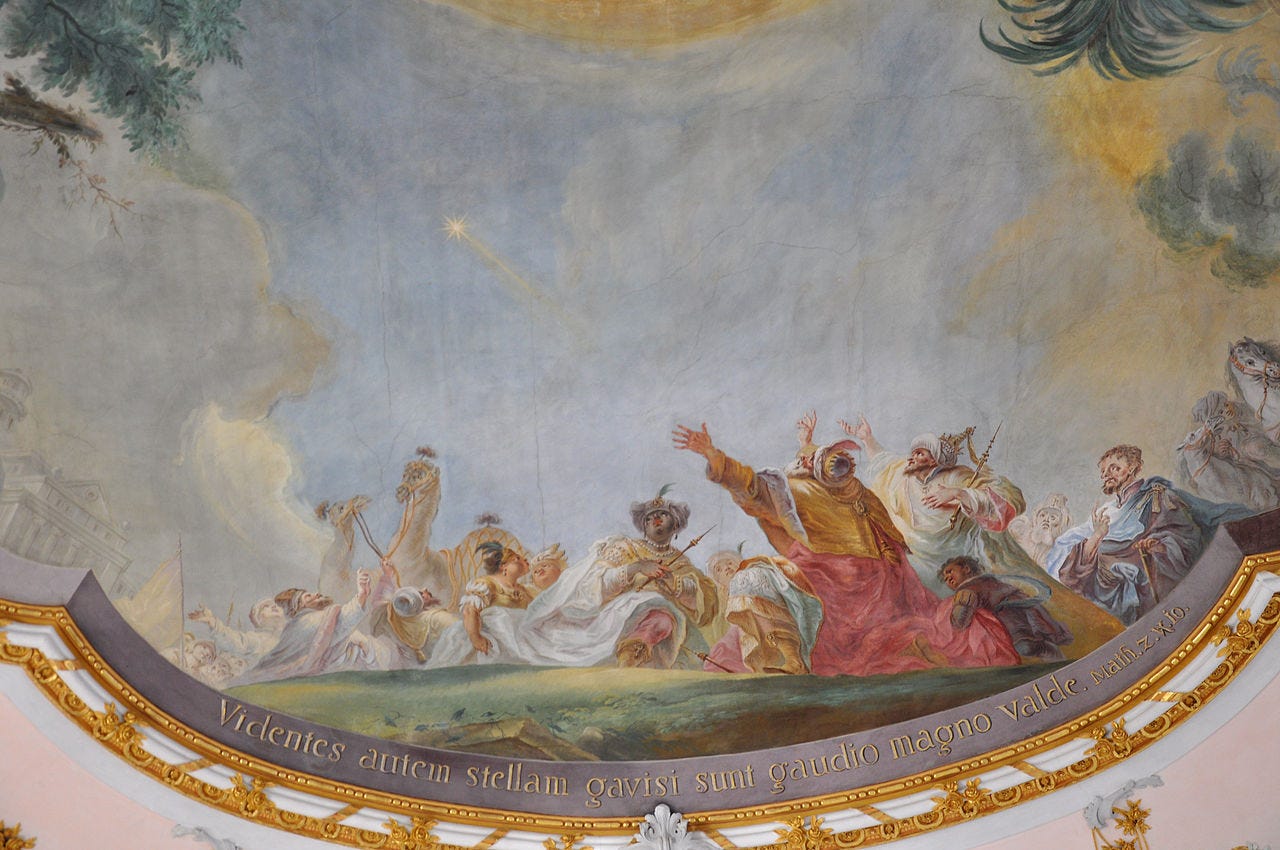
But there’s a practical problem. How do you follow anything that’s high in the sky? If you follow a star, as it rises in the east and sets in the west, you would just go on traveling west forever and ever.
And how can a star point out anything as small as a house? I told the hosts of the show, “My home is west of your studio, so just follow the setting sun and it will guide you there.”
I feel bad about raising these questions, not only because so many Christians find the image inspiring, but also because Christian astronomers have done so much research to identify a comet that might have been passing through the sky at that time, or some group of overlapping constellations would have looked like a single star, in order to vindicate Scripture. But I believe that’s not necessary, because that’s not the kind of star it was.
So after having some vague and grumpy thoughts about this for many years, I was glad to discover that St. John Chrysostom deals with the matter quite clearly and directly. In his homily on Matthew 2, he makes four points:
No star moves in this direction. Stars cross the sky from east to west, but this star moved from north to south, from Persia to Bethlehem.
The star appears not only in the night, but also in the day. It is so brilliant that it outshines the beams of the sun.
The star appears and disappears and reappears. It led them from Persia to Jerusalem, and then they had to stop and ask directions. But after Herod told them to go to Bethlehem, once again the star “went before them.”
A star that is high in the sky could not point out something as small as an earthly shed. But this one led the Wise Men until it “came to rest over the place where the child was.”
This is nothing like a star up in the sky. It’s more like the “cloud by day and pillar of fire by night” (Exodus 13:21) that led the Moses and the people of Israel through the wilderness. This star is a light devised by God for one particular purpose: to lead the Wise Men to the place where the infant Christ dwells.
Now, when the Wise Men initially saw this light, it probably did look like a star in the sky, because that’s what they were used to looking for. Men of their tradition had been searching the skies for centuries, and that’s where they expected to discover heavenly news.
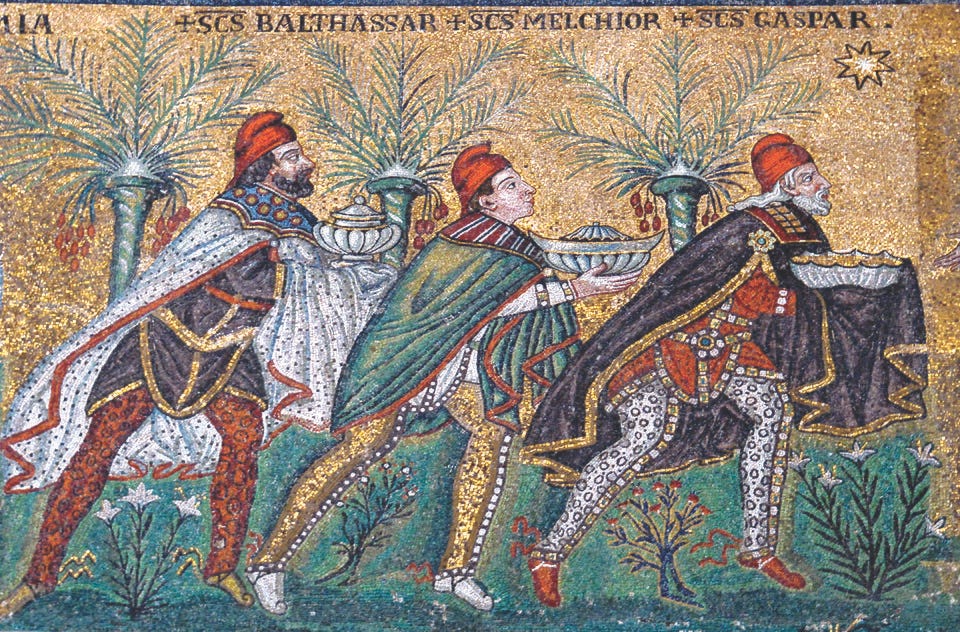
Chrysostom speaks of this so kindly:
God, for the salvation of those who were in error [the Wise Men], accepted to be served by such signs, even though [the Wise Men] had used them to serve devils. Yet he altered the sign slightly, that he might draw them away from their customs by degrees, leading them towards the highest wisdom.
So in the case of the Wise Men he did not disdain to call them by the seeing of a star, so that he might lift them higher ever after. He brought them, leading them by the hand, and set them by the manger; and now it is no longer by a star, but by an angel, that he speaks to them. Thus did they little by little become better men.
So the Wise Men might well have initially seen a brilliant star in the heights, but it must have soon come down closer to their level, if they were able to follow it on their south-west journey.
The forebear of these Wise Men would be Balaam, who features in a delightful story in Numbers 22-24. This would be perhaps 900 years before the birth of Christ.
As the army of Israel encroached on the land of Moab, Balak, the king of Moab, asked the prophet Balaam to come and put a curse on that enemy army. Balaam refused, but eventually relented and got on the road.
Before they had gone far, however, his donkey saw the Angel of the Lord blocking the road, and after trying to go around it, eventually it just lay down. Balaam, not seeing the Angel, beat the donkey in a fury, to make it get going. Then the Lord gave the donkey the power of speech, no doubt to Balaam’s great surprise.
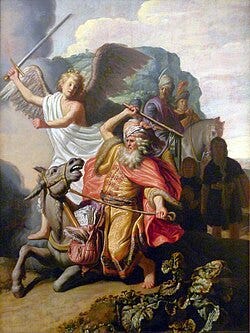
The donkey said to Balaam, “Am I not your own donkey, which you have always ridden, to this day? Have I been in the habit of doing this to you?” “No,” he said [sheepishly].
Then the Lord opened Balaam’s eyes, and he saw the angel of the Lord standing in the road with his sword drawn. So he bowed low and fell facedown…
The angel of the Lord said to Balaam, “Go with the men, but speak only what I tell you.”
Upon his arrival, King Balak showed Balaam the Israelite encampment, and urged him to curse them, but Balaam said he could only speak the words the Lord gave him. When the time came, Balaam did not curse them but blessed them instead. This happened three times, reducing Balak to powerless fury.
But here’s the part that connects us with the Wise Men. Balaam leaves Balak with a final message:
I see him, but not now;
I behold him, but not near.
A star will come out of Jacob;
a scepter will rise out of Israel. (Numbers 24:17)
The star-gazers of Persia kept looking for that star. The prophecy was handed down from generation to generation, for almost a thousand years. And at last, one night, one of them saw a star.
Here is one of the earliest images of the Virgin Mary, found in the catacomb of Priscilla in Rome. It was painted around AD 250.
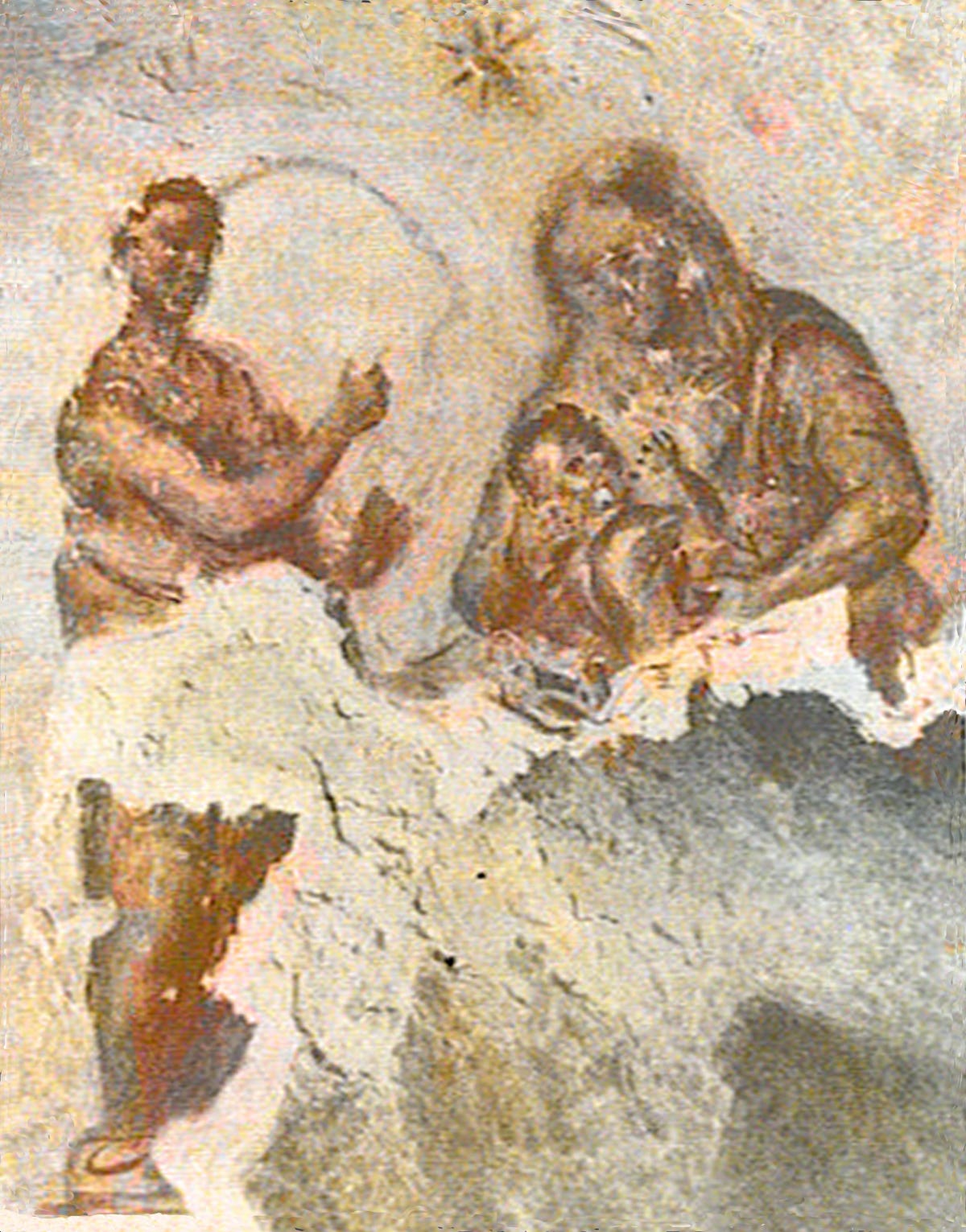
We immediately recognize this as a “Madonna and Child,” but that wasn’t a familiar type then, and people might well have wondered who this woman and child were. So the artist placed next to them a prophet, clothed in a tunic. He’s pointing to a star. This is Balaam, whose ancient prophecy at last came true, when a star led three of his countrymen to a land they did not know, and stopped over the place where the child lay.
Do you know anyone who is burdened by the daily news? Who feels obligated to keep up with what’s happening in the world, but struggles to bear up under the weight of it all?

Pray the News would be a great Christmas gift for those who are troubled or overwhelmed by the daily deluge of news the Internet brings. It’s only $60 for a year, and $80 for two years, at Become a Pray the News Member . You can also sign up for a 7-day free trial.
I use Pray the News as my first daily introduction to the news. Each news story is summarized and followed by a prayer, which helps me immediately remember God’s sovereignty in all things, no matter what happens. It’s such a blessing to know that Christians all over the country, and even all over the world, are joining together in prayer when we ponder these things.
This has been such a blessing to me. We are not alone! We can unite and pray together, no matter what each new day brings.

Prologue of Ohrid - St. Nikolaj Velimirović
Reflection
The Lord Jesus, born in Bethlehem, was first worshiped by shepherds and wise men (astrologers) from the east-the simplest and the wisest of this world. Even today, those who most sincerely worship the Lord Jesus as God and Savior are the simplest and the wisest of this world. Perverted simplicity and half-learned wisdom were always the enemies of Christ's divinity and His Gospel. But who were these wise men from the east? This question was especially studied by St. Dimitri of Rostov. He claims that they were kings of certain smaller regions or individual towns in Persia, Arabia and Egypt. At the same time, they were erudite in the knowledge of astronomy. This wondrous star appeared to them, which announced the birth of the New King.
According to St. Dimitri, this star appeared to them nine months before the birth of the Lord Jesus, i.e., at the time of His conception by the Most-holy Theotokos. They spent nine months in studying this star, in preparing for the journey and in traveling. They arrived in Bethlehem shortly after the birth of the Savior of the world. One of them was called Melchior. He was old, with long white hair and beard. He offered the Lord the gift of gold. The second was called Caspar, of ruddy face, young and beardless. He offered the Lord the gift of frankincense. The third was called Balthasar, of dark complexion and a very heavy beard. He offered the Lord the gift of myrrh.
After their deaths, their bodies were taken to Constantinople, from Constantinople to Milan, and from Milan to Cologne. It can be added that these three wise men were representatives of the three main races of men that descended from Noah's three sons: Shem, Ham and Japheth.
The Persian represented the Japhethites, the Arabian represented the Semites, and the Egyptian represented the Hamites. Thus it can be said that, through these three, the whole human race worshiped the Incarnate Lord and God.
Just a small (or maybe not that small) point: Luke speaks of a manger and shepherds. Mathews speaks of a "house" and magi -- two different events, one coming after the other.